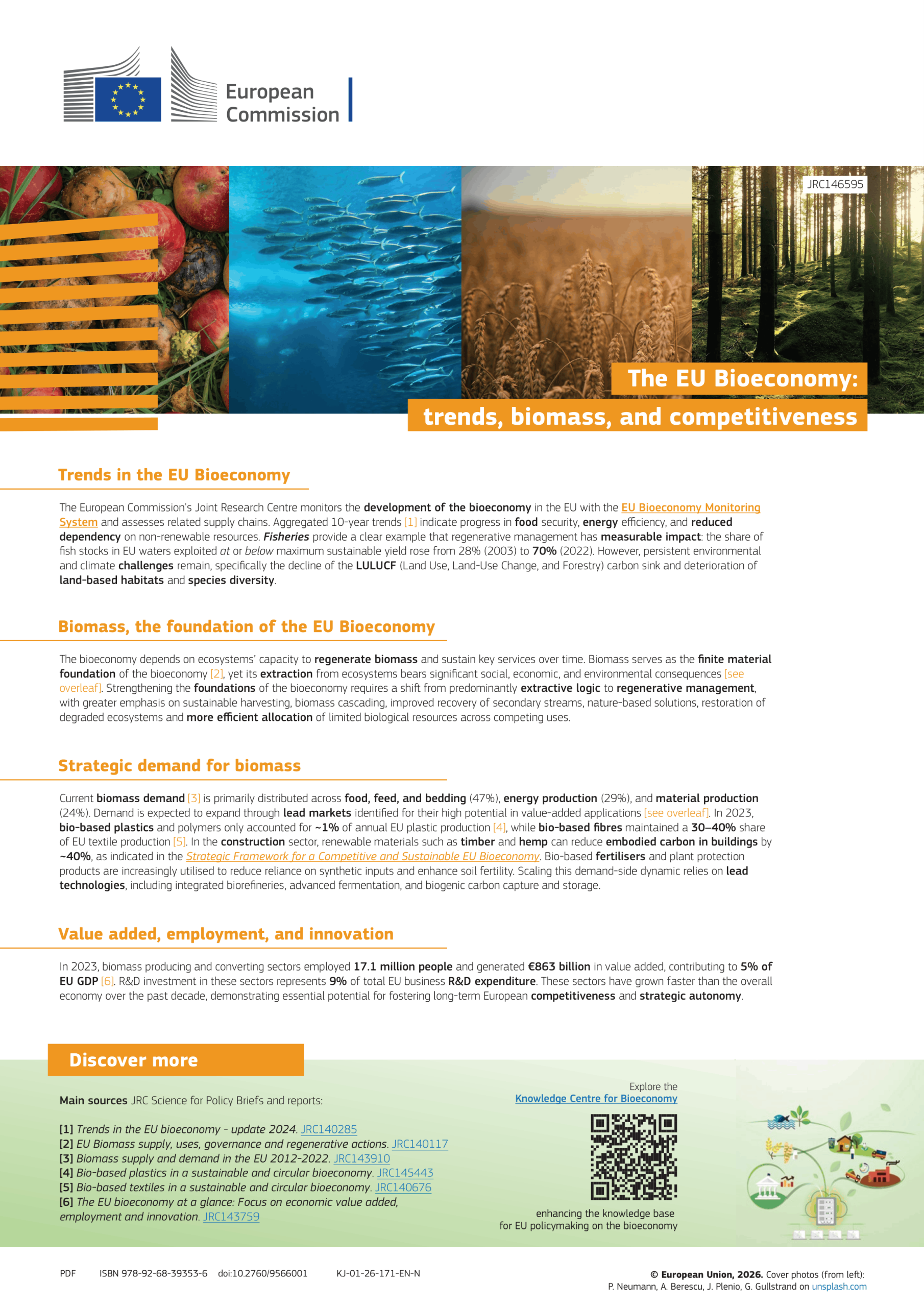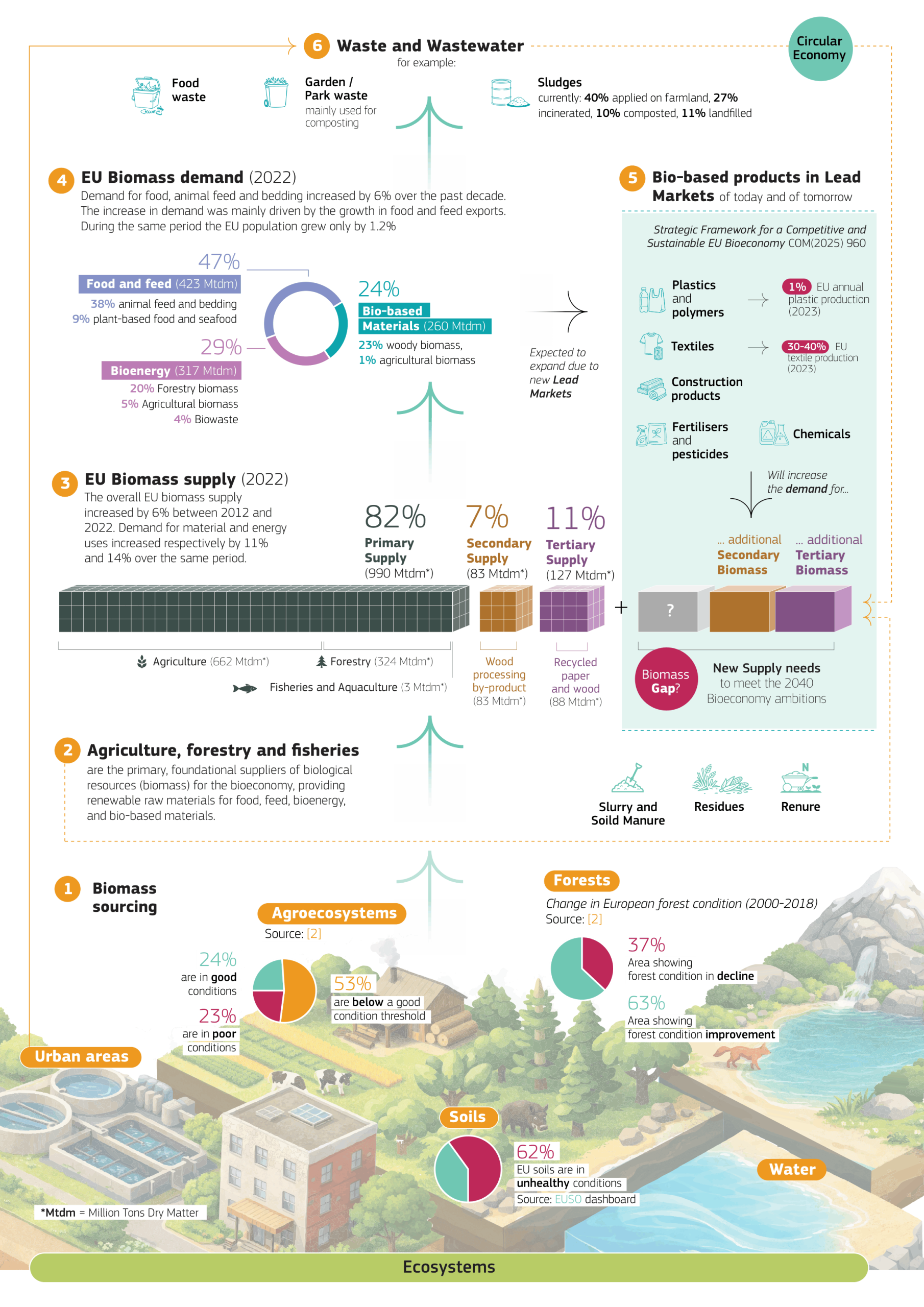

The Joint Research Center (JRC) of the European Commission released a compelling snapshot of Europe’s bioeconomy journey, based on data from the EU Bioeconomy Monitoring System.
The report points out the hard truths. Forest carbon sinks are weakening, land-based habitats are degrading, and biomass demand is outpacing supply. As lead markets for bio-based plastics, textiles, construction materials and fertilizers continue to grow, Europe may be heading toward a structural “biomass gap” well before 2040. Bio-based plastics represent just 1% of EU plastic production, timber and hemp could cut embodied carbon in buildings by 40%, and bio-based fibres share a 30-40% of the EU textile production. Scaling these lead markets requires deploying integrated biorefineries, advanced fermentation, and biogenic carbon capture at industrial speed.
The message is clear: the bioeconomy must shift from an extractive logic to a genuinely regenerative one.
CIRCLE project is a prime example of this regenerative approach by valorizing food waste streams and other biomasses into high-value bio-based chemicals – lactic acid (LA) and polylactic acid (PLA)-based products – and demonstrating exactly the kind of circular, waste-first logic the JRC is calling for.