
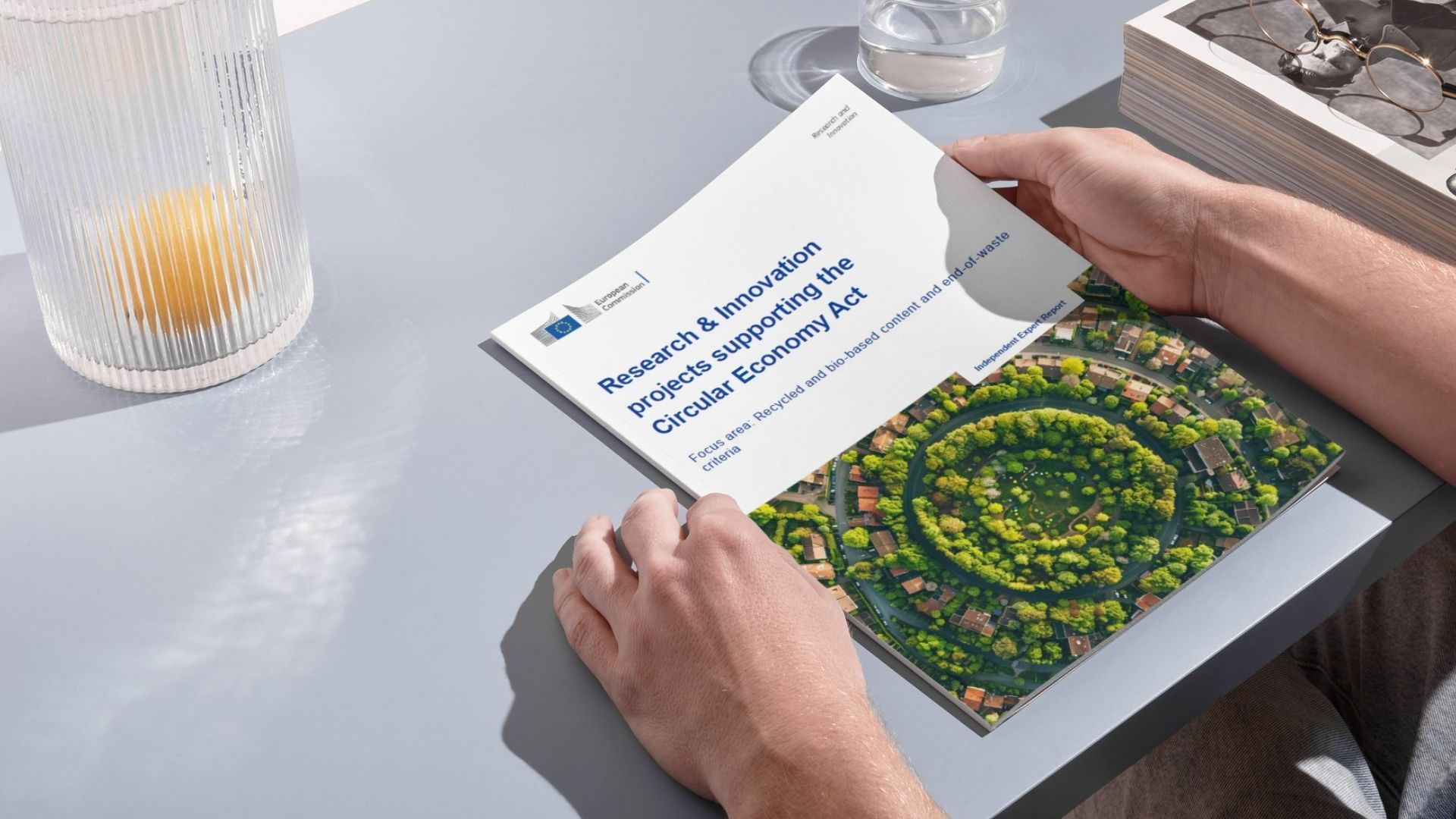
A new European Commission publication highlights the important role that the forthcoming Circular Economy Act could play in accelerating the uptake of sustainable and bio-based materials.
While the EU has already demonstrated the technical feasibility of circular solutions, the report stresses that harmonised regulations and stronger market incentives are needed to enable large-scale deployment.
The report calls for clearer End-of-Waste criteria, improved digital traceability through Digital Product Passports (DPPs), and stronger demand for recycled and circular materials. These measures are expected to create more predictable markets for innovative materials, including bio-based alternatives, while improving transparency on material origin, composition, and end-of-life management. The publication also emphasises the importance of designing products for durability, repair, reuse, and eventual recovery. Combined with eco-modulated Extended Producer Responsibility (EPR) schemes and investment in collection and sorting infrastructure, these measures would help integrate bio-based materials into circular value chains and maximise their environmental benefits.
According to the report, the Circular Economy Act offers an opportunity to shift EU policy towards a more integrated framework that supports high-quality secondary and renewable materials, strengthening both industrial competitiveness and Europe’s transition to a more resource-efficient and sustainable economy.